Architecture
go-zero is a cloud-native microservices framework built around a layered design that separates concerns while keeping each layer thin and replaceable.
1. System Overview
Section titled “1. System Overview”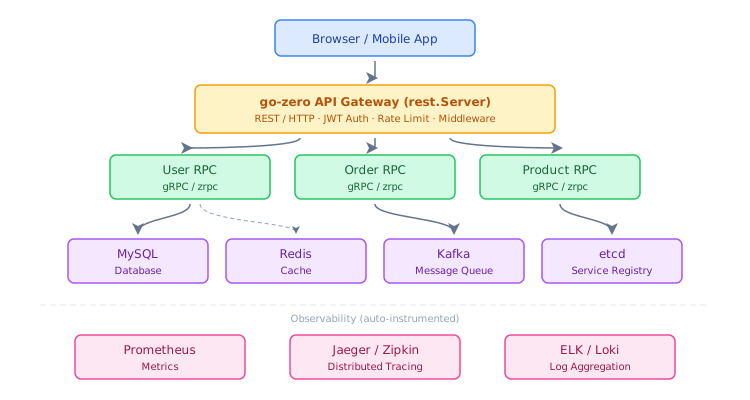
2. HTTP Request Lifecycle
Section titled “2. HTTP Request Lifecycle”Every incoming HTTP request flows through a fixed pipeline before reaching your business logic:
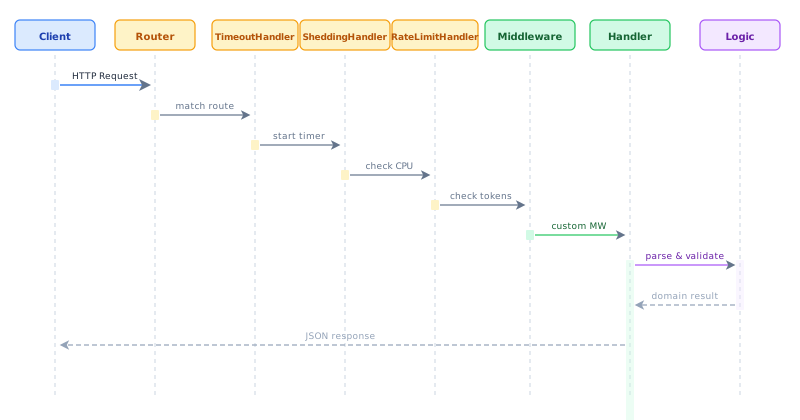
What each layer does:
| Layer | Component | Purpose |
|---|---|---|
| Timeout | TimeoutHandler | Enforce per-request deadline (config: Timeout) |
| Load shedding | SheddingHandler | Reject requests when CPU > threshold |
| Rate limiting | RateLimitHandler | Token-bucket rate limiter per route |
| Middleware | Your code | Auth, logging, CORS, etc. |
| Handler | Generated | Unmarshal request → call Logic |
| Logic | Your code | Business rules, DB/RPC calls |
3. Middleware Chain Execution Order
Section titled “3. Middleware Chain Execution Order”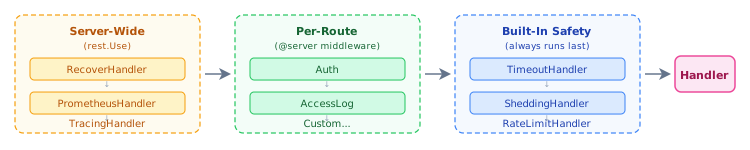
Server-wide middleware is registered via server.Use(...) and runs for every request. Per-route middleware is declared in the .api file’s @server block and generated into ServiceContext. Built-in safety handlers always run last before your handler code.
4. API Gateway → RPC Wiring
Section titled “4. API Gateway → RPC Wiring”goctl generates the full wiring between the HTTP layer and RPC clients:

ServiceContext is the dependency injection container. It holds all RPC clients, DB connections, cache references, and config. Both handler and logic layers share it via a pointer.
5. Resilience: Rate Limiting & Circuit Breaking
Section titled “5. Resilience: Rate Limiting & Circuit Breaking”
go-zero’s circuit breaker uses a sliding-window failure counter. The breaker opens when the error ratio in the past 10 seconds exceeds the configured threshold (default: 50%). In half-open state it lets one probe request through.
Configuration:
# Automatically applied to every zrpc call and every outbound HTTP call# No explicit config needed — go-zero enables it by default6. Observability Pipeline
Section titled “6. Observability Pipeline”go-zero instruments every layer automatically:
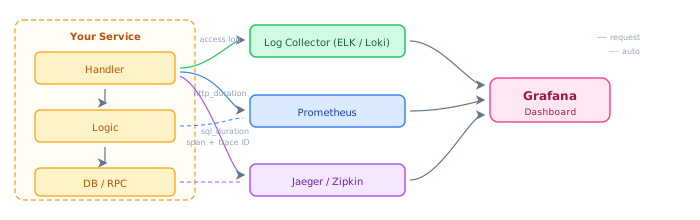
Enabling:
# Structured logging (always on)Log:  ServiceName: order-api  Mode: file          # console | file  Level: info  Encoding: json
# MetricsPrometheus:  Host: 0.0.0.0  Port: 9101  Path: /metrics
# Distributed tracingTelemetry:  Name: order-api  Endpoint: localhost:4317  Sampler: 1.0        # 1.0 = 100% sampling  Batcher: otlpgrpc
All logs carry a trace_id and span_id field that correlate with Jaeger traces — no manual instrumentation required.
Next Steps
Section titled “Next Steps”- Design Principles — how go-zero enforces these layers
- Distributed Tracing tutorial — hands-on Jaeger setup
- Circuit Breaker component — configuration reference